Overview
Children's Healthcare of Atlanta is one of the largest pediatric health systems in the United States, serving patients across a network of hospitals, urgent care centers, and specialty clinics. My engagement spanned multiple concurrent initiatives across patient-facing products, internal analytics tools, and organizational design capability.
Work spanned the full UX lifecycle — from user research planning and interview facilitation to interaction design, prototyping, and component library development — in close collaboration with IT, executive leadership, medical providers, and clinical informaticists. I also acted as a cross-departmental subject matter expert, consulting on UX questions from teams outside the direct project scope, and contributed to physical logistics and volunteer efforts alongside the design work.
The breadth of this engagement — across distinct product types, clinical domains, and stakeholder groups — required a consistent research-first process and a design approach calibrated to users with widely varying healthcare literacy and digital fluency.
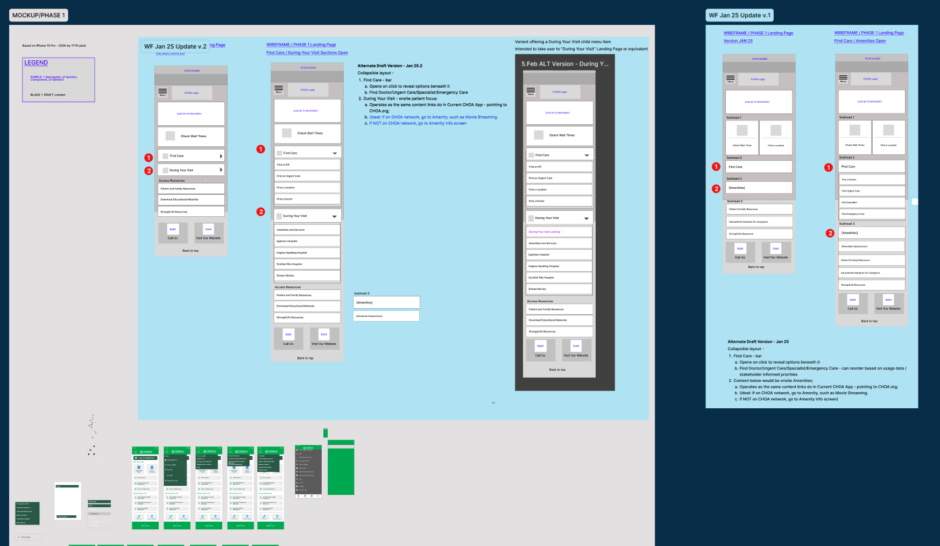
Patient-Facing App Redesign
The Children's patient-facing mobile application was undergoing an end-to-end redesign in anticipation of the new Arthur M. Blank Hospital — a significant expansion of CHOA's footprint that represented a new phase in the organization's history and a natural inflection point for the digital patient experience.
The team grounded the redesign requirements in usage data from prior app iterations, using behavioral patterns to identify where the existing experience was failing patients and their families before scoping any new features. Requirements gathering and initial design work were directly shaped by what that data showed about actual use, not assumed need.
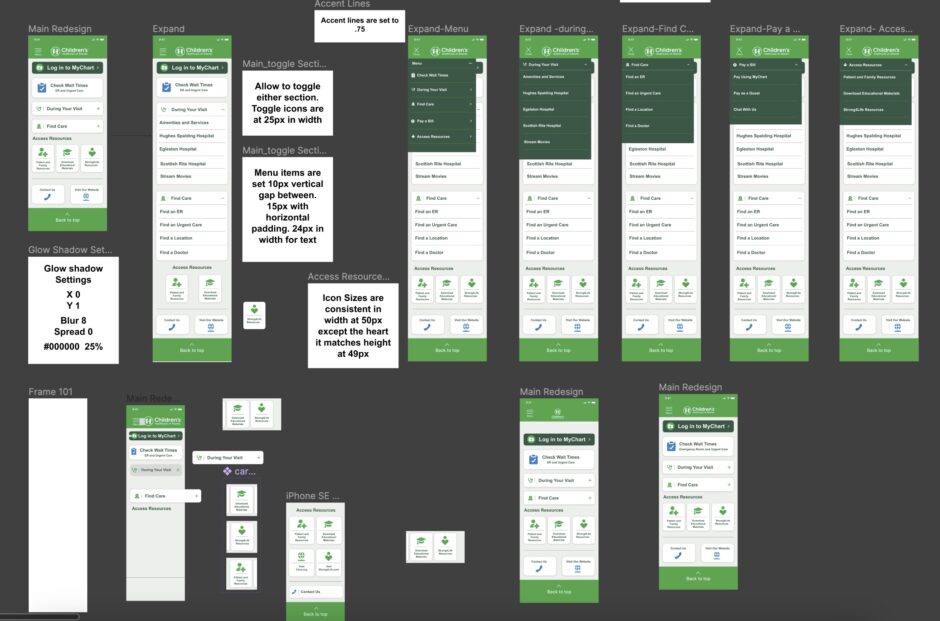
Working with the Marketing and Product teams, I developed both the component library and the visual design language for the application — material that would serve not only the redesign itself but also feed into the broader UX and branding standards being established for CHOA's future technology direction. The resulting designs were implemented as engineering requirements for the software development teams.
Data Analytics Dashboards
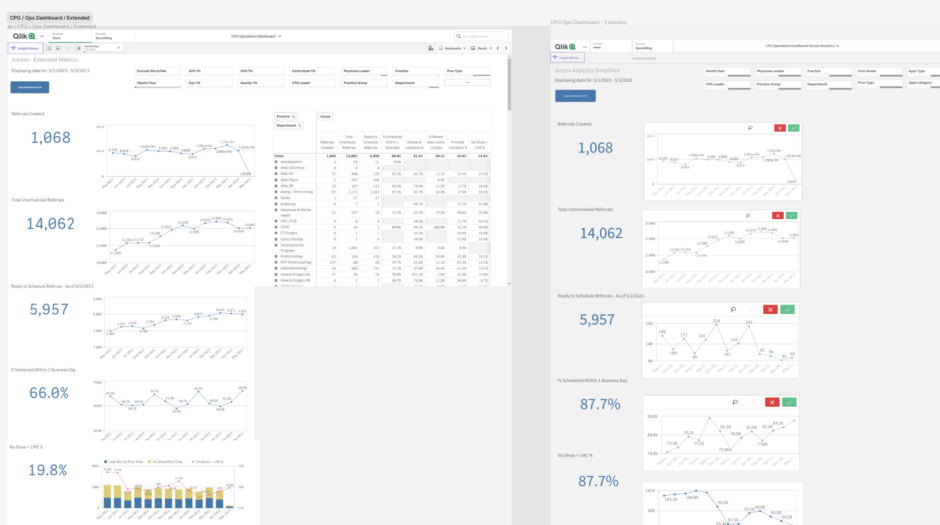
CHOA's Data Analytics team operated a set of dashboards used by managers and directors across the organization to analyze key metrics — clinical effectiveness, provider capacity management, and departmental performance. The dashboards had accumulated over time without a unified UX direction, and the team needed a redesign that would serve users from individual providers through entire departments and practices.
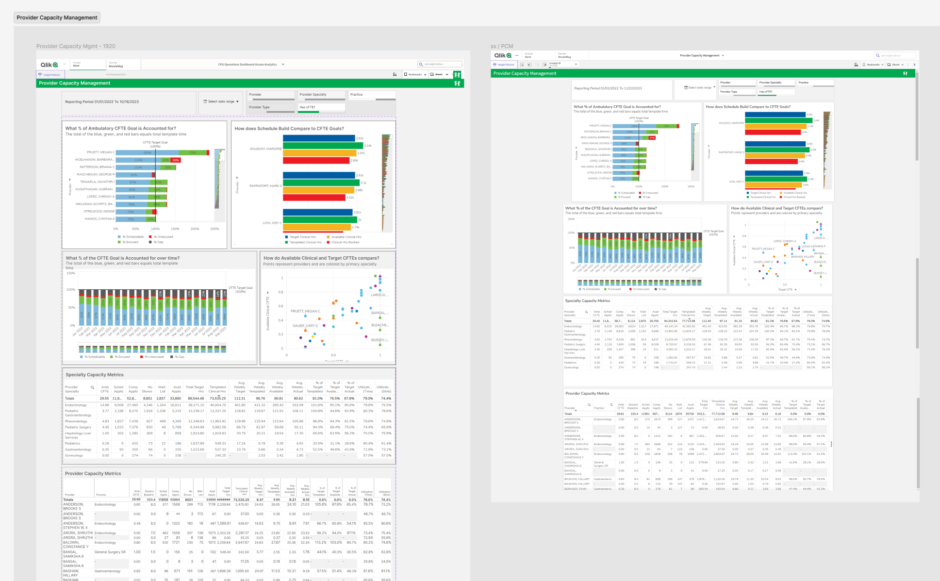
The research process involved dozens of interviews with users at every level of the data analytics organization — from frontline analysts to departmental directors. The goal was twofold: to identify workflow improvements that would make individual jobs easier, and to ensure that reporting and navigation worked coherently across teams, enabling clear lines of communication rather than reinforcing the silos the dashboards were meant to bridge.
Behavioral Mental Health Research
The behavioral mental health initiative involved extensive qualitative research across multiple user groups — patients, their families, and their healthcare providers and informaticists — to map and optimize the behavioral-mental health workflow for serving patients and ensuring consistent communication between care teams.
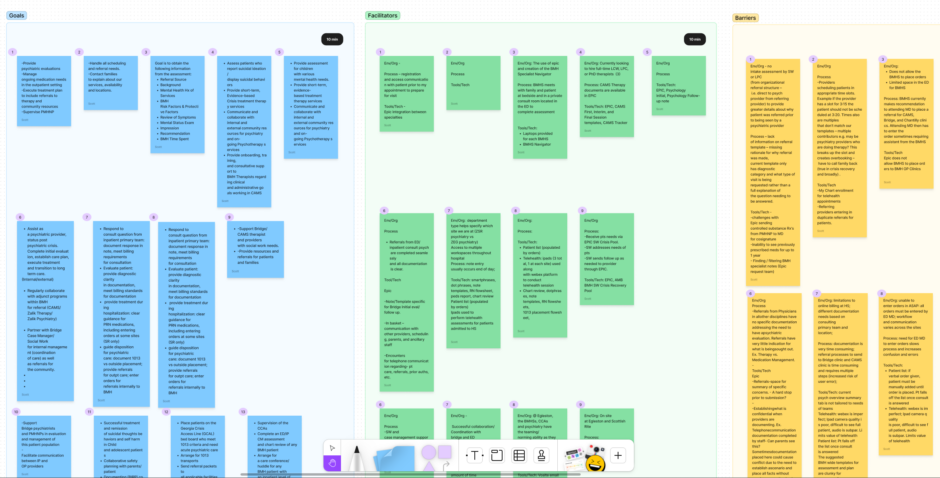
Findings from this research informed the development of a behavioral-mental health inventory to evaluate how cancer survivors were progressing emotionally and psychologically alongside their physical health recovery. The research also shaped the full service design of the clinics where patients receive their post-treatment care — a scope that extended beyond the digital interface into the physical environment and clinical workflow.
A research plan framework developed in partnership with healthcare providers and informaticists from Emory and other pediatric hospital systems extended the value of this work beyond CHOA, establishing a shared methodology for behavioral health research across peer institutions.
Human-Centered Design Program
In parallel with project work, I developed and delivered a Human-Centered Design course for managers across CHOA — a curriculum designed to give non-designers the framework and vocabulary to make better decisions about their teams' products and workflows without requiring them to become practitioners themselves.
The program also extended into internal tooling: work on internal sites and surveys using SharePoint and REDCap contributed to the operational infrastructure supporting both research and design workflows across departments.